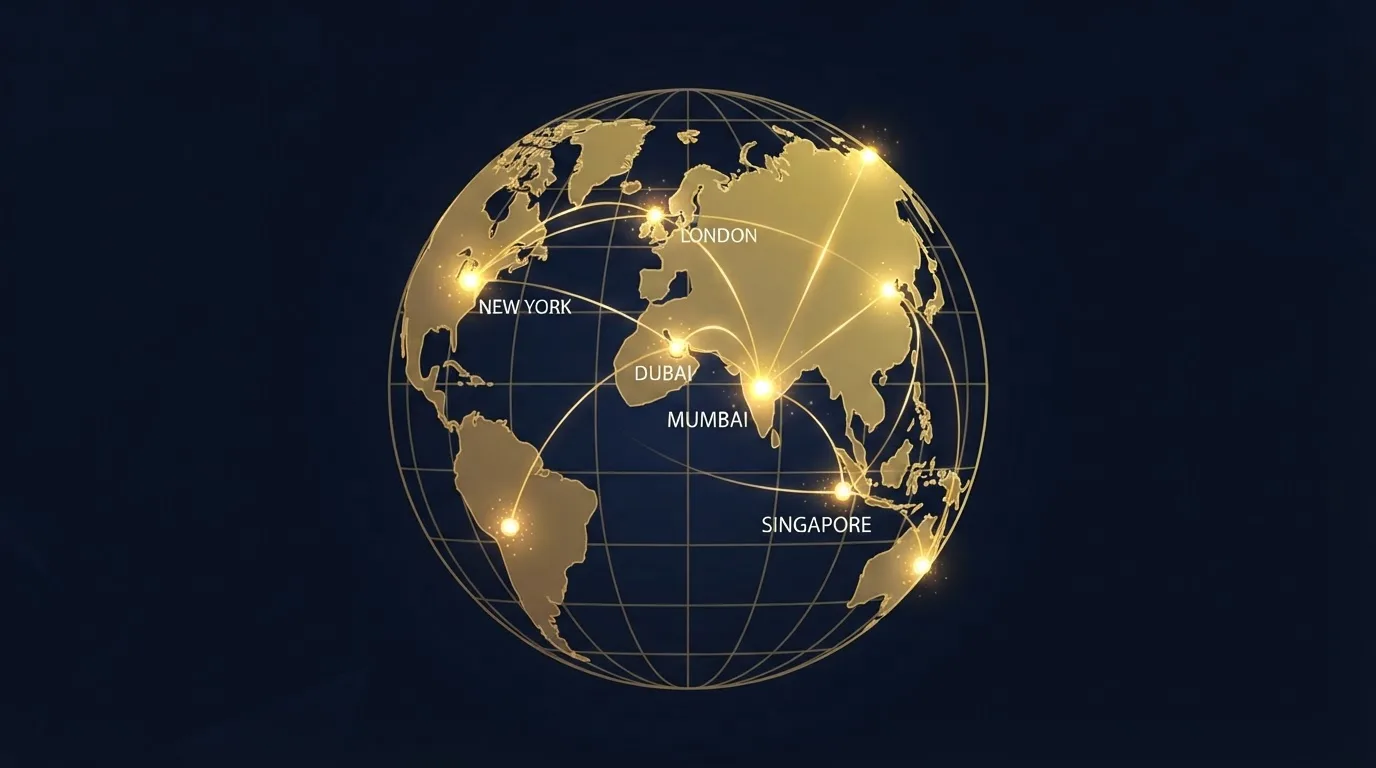
International Business Setup (2026): India, UAE, Singapore, GIFT City & Beyond
Global business expansion guide 2026 — company setup in Singapore, UAE, USA, UK and GIFT City IFSC, with tax benefits and FDI data. Book a free cross-border expansion consultation.
Sources: DPIIT FDI Data, Jun 2026 • IFSCA / EY GIFT IFSC Advisory • DPIIT / Understand UPSC • IBEF, Aug 2026
Whether you're an Indian founder setting up a holding company abroad to raise international capital, or a foreign company entering India, cross-border structuring has never been more active — India's FDI equity inflows hit $58.85 billion in FY 2025-26, up 18% year-on-year, and structures like GIFT City's IFSC are making India itself an increasingly attractive base for international financial operations.
This guide covers the most common expansion routes — Singapore, UAE, USA, UK, and India's own GIFT City — including the tax and regulatory considerations that actually determine which jurisdiction fits your business.
Where Indian Founders Actually Expand — and Why
Singapore
The most common holding-company jurisdiction for Indian startups raising international VC funding, thanks to its favorable tax treaty with India, strong IP protection regime, and investor familiarity/comfort with Singapore-incorporated cap tables.
UAE (Dubai / Free Zones)
A fast-growing base for founders targeting Middle East, African and South Asian markets, with 0% corporate tax available in many free zones, no personal income tax, and increasingly deep venture capital presence in Dubai and Abu Dhabi.
USA (Delaware / Wyoming)
The default choice for startups targeting US venture capital directly — most US VCs strongly prefer investing into a Delaware C-Corp, making a US flip a common step for startups pursuing Silicon Valley funding.
United Kingdom
A common choice for startups with UK/European market ambitions or founders with existing UK residency/business ties, offering straightforward company formation and access to UK-specific grant/investment schemes.
GIFT City IFSC (India's Own International Hub)
India's International Financial Services Centre in GIFT City offers a genuine alternative to setting up abroad — eligible units get a 100% tax deduction on business income for any 10 consecutive years out of 15, reduced Minimum Alternate Tax, and access to foreign currency transactions from within India, positioning it as a serious competitor to Singapore and Dubai for fund structures, fintech and financial services companies.
FEMA Compliance: The Rule That Applies to Every Cross-Border Structure
Any transaction involving Indian residents and foreign entities — whether it's an Indian founder holding shares in a foreign holding company, or a foreign investor putting capital into an Indian entity — falls under FEMA (Foreign Exchange Management Act) regulations. Common structures like the 'flip' (where an Indian operating company becomes a subsidiary of a new foreign holding company) require specific RBI-compliant documentation (Overseas Direct Investment filings, FC-TRS, etc.) to avoid being flagged as a compliance violation years later.
Cross-Border Compliance Doesn't End at Incorporation
Every jurisdiction you operate in creates an ongoing compliance obligation — annual filings in Singapore/UAE/USA/UK, transfer pricing documentation for any intercompany transactions, and Indian tax residency/reporting requirements for Indian founders or directors of the foreign entity. Founders frequently underestimate this ongoing burden when they focus only on the initial setup.
India FDI Equity Inflows Trend (USD Billion)
Jurisdiction Comparison for Cross-Border Expansion
| Jurisdiction | Corporate Tax | Best For |
|---|---|---|
| Singapore | 17% (with exemptions for new startups) | International VC fundraising, IP holding |
| UAE (Free Zone) | 0% (many free zones, conditions apply) | Middle East/Africa market access |
| USA (Delaware) | 21% federal + state | US venture capital, Silicon Valley investors |
| UK | 25% (main rate) | UK/EU market access |
| GIFT City IFSC (India) | 0% effective (10 of 15 yrs, eligible units) | Fund structures, fintech, financial services |
Questions Founders Search Before Hiring an Advisor
What is a "flip" structure and why do Indian startups do it?
A flip is when an Indian operating company restructures so a newly-created foreign holding company (commonly in Singapore or the US) owns the Indian entity, with existing shareholders swapping their Indian shares for shares in the new foreign parent. Startups do this primarily to access international VC funding, since many foreign investors prefer or require a foreign holding structure.
Is GIFT City a good alternative to Singapore or Dubai?
For specific business types — funds, fintech, financial services, ship leasing, insurance — GIFT City's IFSC offers comparable or better tax benefits (100% deduction for 10 of 15 years) while keeping operations within India's jurisdiction and access to Indian talent. For general holding-company purposes preferred by international VCs, Singapore/Delaware are still more established choices.
Do I need RBI approval to set up a company abroad as an Indian resident?
Indian residents can set up foreign companies under the Overseas Direct Investment (ODI) route within FEMA-prescribed limits (typically automatic route within certain financial limits), but it requires specific filings and reporting — it's not a simple, unregulated process.
What is the biggest compliance mistake founders make with cross-border structures?
Treating the foreign entity setup as a one-time task and neglecting ongoing FEMA reporting (like Annual Performance Reports for ODI), transfer pricing documentation, and Indian tax residency implications for founders who become directors of the foreign entity.
Ready to Get Expert Global Expansion Help?
Book a free consultation with our advisory team — get a fixed-fee quote and clear timeline within one business day.
Frequently Asked Questions
How much does it cost to set up a Singapore or UAE company?
Singapore company setup typically costs SGD 3,000-8,000 (~₹1.9-5 lakh) including first-year compliance; UAE free zone setup varies widely by free zone and license type, roughly AED 15,000-40,000+ (~₹3.4-9 lakh). We provide an exact quote after understanding your specific structure needs.
How long does it take to incorporate a company in the USA or UK?
A Delaware C-Corp can typically be incorporated within 1-2 weeks; UK company formation is often even faster, within days, given its highly digitized Companies House process.
Do you help with the entire "flip" process for raising US/international VC funding?
Yes — flip structuring is a specialized service combining foreign incorporation, FEMA/RBI compliance (ODI or swap structures), cap table restructuring, and coordination with international legal counsel where needed.
Can you set up a GIFT City IFSC entity for us?
Yes — we assess eligibility for GIFT City's tax benefits based on your business activity, and manage the IFSCA registration and SEZ unit setup process.
What ongoing compliance is required after setting up a foreign entity?
This includes annual filings in the foreign jurisdiction, RBI/FEMA reporting (like the Annual Performance Report for ODI structures), transfer pricing documentation for intercompany transactions, and Indian tax implications for resident directors/shareholders — all of which we manage as an ongoing retainer.
Which jurisdiction is best for a SaaS startup targeting global customers?
This depends on your target investor base and customer geography — Singapore is common for Asia-Pacific-focused SaaS with international VC ambitions, while a Delaware flip is typical if you're specifically targeting US venture capital.
Do you assist foreign companies wanting to enter the Indian market?
Yes — inbound expansion (foreign company setting up an Indian subsidiary, liaison office, or branch office) is a core part of our global expansion practice, including FDI compliance and sector-specific approval requirements.
What is FEMA and why does it matter for global expansion?
FEMA (Foreign Exchange Management Act) governs all foreign exchange transactions involving Indian residents, including outbound investment (ODI) and inbound investment (FDI). Non-compliance can result in penalties, so every cross-border structure needs to be FEMA-compliant from day one.
Can Indian founders retain Indian citizenship while owning a foreign company?
Yes — Indian citizens can own and direct foreign companies while retaining Indian citizenship, subject to FEMA compliance (ODI filings) and appropriate personal income tax reporting for their foreign holdings/income.
Why choose Matriye Capital for international business setup?
We combine hands-on incorporation experience across India, UAE and Singapore with FEMA/RBI compliance expertise — so your cross-border structure is built correctly from day one, not just cheaply and quickly.
In-Depth Global Expansion Blog Guides
Pricing, process, FAQs and how to get started — a dedicated guide for every service below.
More In-Depth Guides
Talk to a Global Expansion Specialist Today
Get a fixed-fee quote and a clear timeline within one business day.